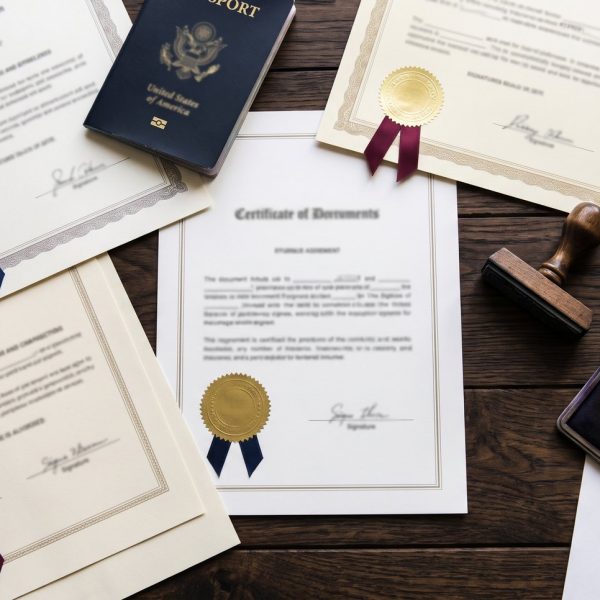
Anyone who has tried to use a birth certificate, diploma or court order in another country has probably met the word "apostille" and wondered what it really means. So, what is an apostille? In short, it is a standardized certificate that confirms a public document is genuine, so that authorities in another member country can accept it without further embassy checks. Understanding how it works, and how it differs from notarization and translation, can save you weeks of back and forth.
What is an apostille, in plain terms
An apostille is issued by a designated authority in the country where your document was created. In the United States, that is usually the Secretary of State of the state that issued the document, or the U.S. Department of State for federal records. In the United Kingdom, it is the Foreign, Commonwealth and Development Office. The apostille is attached to the original document, or to a certified copy, and confirms the signature, seal and capacity of the official who signed it.
The system exists thanks to the Hague Convention of 1961, which created a single simplified procedure among member countries. The Apostille Section of the Hague Conference keeps an up to date list of participating states and competent authorities, which is the first place to check before you start. Wikipedia also has a clear summary of the Apostille Convention and its history if you want the background.
What an apostille does not do is equally important. It does not certify that the content of the document is correct, and it does not translate anything. It simply tells the receiving authority that the document came from a real official source.
Apostille vs notary: two different jobs
The apostille vs notary confusion is one of the most common we see. A notary public verifies identities and witnesses signatures, typically on private documents such as affidavits, powers of attorney or consent letters. Notarization makes a private document more trustworthy at home, but it does not, on its own, make it valid abroad.
Very often the two steps work together. A power of attorney signed in front of a notary may then need an apostille on the notary's signature before it can be used in Spain or Italy. In that chain, the notary confirms who signed, and the apostille confirms the notary is genuine. Public records such as birth, marriage and death certificates usually skip the notary entirely and go straight to the issuing authority for the apostille.
If the destination country is not a member of the convention, the apostille route is not available at all. You would instead need full consular legalization, which involves several authorities and the embassy of the destination country, and takes considerably longer.
Apostille documents that commonly need translation
Most apostille documents travel because someone is moving, studying, marrying or doing business abroad. Typical examples include vital records, academic diplomas and transcripts, police background checks, court decrees, company registration certificates and powers of attorney. If the receiving country uses a different language, the authority will almost always ask for a translation as well.
That is where timing becomes tricky. Some countries want the apostille itself translated along with the document, others accept the bilingual apostille form as it is, and a few require the translation to be done by a sworn translator in the destination country. The safest approach is to ask the receiving office exactly what it expects before you order anything. There is a helpful breakdown of which comes first, the apostille or the translation that walks through the most common scenarios.
How apostille services and certified translation fit together
Professional apostille services can handle the paperwork for you, submitting documents to the right state office and returning them by courier. This is useful when you live far from the issuing state or are working against a deadline. Many translation companies coordinate both steps, so that the apostilled original and the certified translation arrive as a single, consistent package.
A certified translation should reproduce every element of the document, including stamps, seals, handwritten notes and the apostille certificate if required. Names must match passports exactly, and dates should follow the format the receiving authority expects. For a clear overview of how translators handle these files, PoliLingua has a practical guide to apostille translation that is worth a read before you place an order.
Practical tips before you start
Order a fresh certified copy of vital records rather than using an old one, since some authorities reject documents older than three or six months. Check whether the destination accepts electronic apostilles, which several US states now issue. Keep scanned copies of everything, and never laminate a document that might need an apostille, since the certificate has to be physically attached.
Above all, plan the order of steps in writing: obtain the document, notarize if needed, apostille, then translate, unless the receiving office tells you otherwise. Once you understand what an apostille is and what it is not, the process stops feeling bureaucratic and becomes a simple checklist you can follow with confidence.