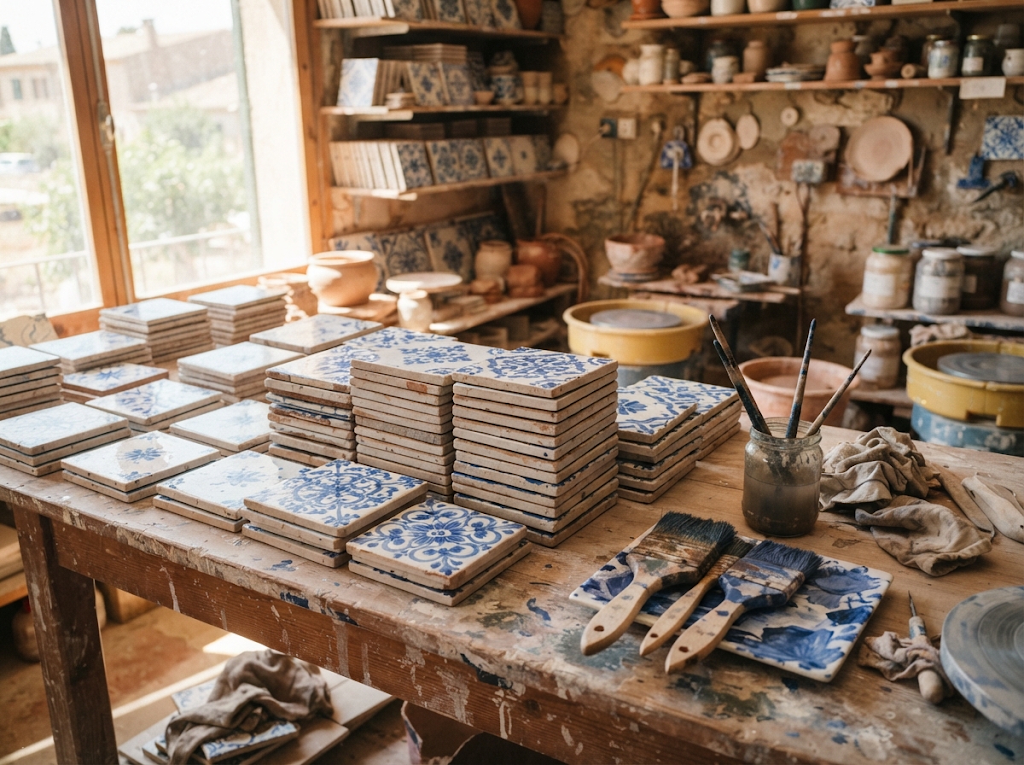
Walk through Lisbon, Porto or Aveiro and you will see them on church walls, railway stations and ordinary house fronts: azulejos, the painted ceramic tiles that have decorated Portugal for five centuries. Today small workshops and larger factories export tiles, tableware and decorative ceramics to architects, hotels and private buyers around the world. A designer in New York or London who falls in love with a pattern has many questions. How is it made? Is it glazed for outdoor use? What does a square metre cost, and how long does delivery take? Ceramics are sold on beauty, but contracts are won on specifications, and a clear English data sheet is what turns an admired sample into a large order. This guide explains how Portuguese ceramic makers can prepare English materials for export.
Who Buys and What They Ask
Buyers include architects, interior designers, hotel groups, restaurant chains, distributors and private homeowners. Each asks different questions. Architects want technical performance and certificates, designers want colours and custom options, hotels want durability and delivery schedules, and homeowners want care instructions. A well organised website or catalogue answers each group quickly.
Technical Data Sheets
A data sheet should state dimensions, thickness, weight, water absorption, frost resistance, slip resistance, surface finish, and the standards the tiles meet. Use the same terms in every product line and use units that match the buyer's market. If a tile is suitable for floors, walls, pools or exteriors, say so in a table. Standards organisations such as iso.org publish the references that many specifiers use to compare products.
Names, Patterns and Heritage
Pattern names often have a story. Some refer to a church, a historical period or a family workshop. Keep the Portuguese name and add a short English explanation, and avoid exaggerated claims about age or origin. If a design is protected or made under licence, state the rights clearly. Customers value authenticity, and honest provenance protects the maker from disputes.
Working With Language Professionals
Catalogues, contracts and certificates call for expert help. A provider of portuguese document translation services can prepare product sheets, installation guides and export documents with consistent terms for glazes, firing, substrates and adhesives. Ask for translators who have worked with construction or design texts, and keep a glossary so that every document speaks with one voice.
Installation and Care Instructions
Many complaints about tiles stem from installation. Explain surface preparation, adhesive type, joint width, cutting, sealing and cleaning in short steps. Warn about common mistakes, such as using the wrong adhesive on exterior areas. Illustrate each step, and give contact details for technical support. For related reading on documents that follow goods across borders, see this article on bank statement translation.
Samples, Colour and Expectations
Colour on a screen differs from colour in a room, and handmade glazes vary from batch to batch. Explain this honestly, and offer physical samples. Describe the finish in plain terms such as glossy, satin or matt, and note when small variations are normal. Clear expectations prevent complaints after delivery.
Custom Orders
Architects often want custom colours, sizes or patterns. Write a clear page explaining how to request a custom design, what information you need, minimum quantities, lead times and costs. Include a form in English that collects the necessary details. A good briefing saves weeks of emails.
Shipping, Packaging and Breakage
Ceramics are heavy and fragile. State how tiles are packed, how many boxes fit on a pallet and what the delivery terms are. Explain what happens when tiles arrive damaged, which photos are needed and the time limit for claims. Customs documents must describe the goods accurately, and codes must match the product.
Contracts, Payment and Warranty
Supply contracts with distributors and large projects need careful wording about delivery dates, quality standards, penalties and warranty. Have lawyers on both sides review the final version, and agree which language prevails. Keep a record of signed versions in both languages together with specification sheets.
Trade Fairs and Showrooms
International fairs are where many relationships start. Prepare bilingual brochures, sample boards and price lists, and train staff to answer technical questions in English. Collect contacts with a short form and follow up within a week with relevant documents. A neat, accurate follow-up email stands out among the hundreds of cards a buyer collects.
Digital Presence
Photographs of finished spaces sell tiles better than photos of boxes. Add captions in English that name the pattern, the colour and the place. Write short project stories for hotels and homes, and label them with the right keywords. Keep the English site updated whenever the collection changes.
Craft Deserves Clear Words
Maintain a glossary of ceramic terms, a style guide for tone and a single source for product data. Review your English pages every season and ask buyers what they could not find. When the words are as carefully made as the tiles, the product can travel anywhere without losing its character.
Sustainability and Local Craft
Buyers increasingly ask about energy use, clay sourcing and water recycling in factories. If you have data or certificates, present them in clear, plain English with dates and numbers, and avoid vague claims. Describe how local craftspeople are trained and how traditional painting techniques are preserved. Specific facts are more persuasive than slogans, and they stand up to questions from buyers and journalists.